Nadia Born
The moment the prohibition passed, our tongues forgot the shape of questions. We were forbidden from asking anything in any way – effective immediately.
The congressman who drafted the law appeared on TV to explain its scope: the criminalization of asking, the expunging of certain words from dictionaries and the censorship of lines from blogs, books, songs, radio shows, videos, etc. “We won’t be taking any questions,” he said to the room of journalists. Some wise guy counted how many queries the lawmakers made before approving the prohibition (102). Soon after he was arrested for blurting out a question of his own: “What’s the world coming to?”
But even the most skeptical politicians agreed something had to be done: our country was so divided, so volatile that families replenished their Y2K canned food stockpiles – just in case. “The melting pot of America has reached its boiling point,” said one representative, grinning. With the prohibition, we were gagged, unable to argue or stir up discontent, distracted by the inconvenience of having questions vanished from conversation. Poets wrote that language had molted and left behind a pale phantom in its stead; statisticians celebrated the dip in crime nationwide. Pollsters wanted to survey public opinion but found their hands were tied. At once, a chorus of supporters called for the congressman to be nominated for the Nobel Peace Prize.
* * *
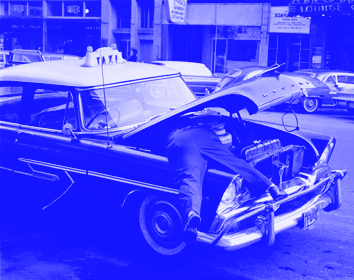
Overnight, trivia hosts were out of work, scientists stood baffled in their laboratories, taxi drivers waited for passengers to tell them where to go. Nurses fell mute without their usual comforting chatter – “How are we today?” – and linguists mourned the loss of their favorite auxiliary verbs. Police investigations were indefinitely halted and replaced with forced confessions. Magic 8 balls were recalled. Priests rewrote sermons to take out rhetorical tricks and house painters held out color swatches like magicians with playing cards to choose from. Newspapers went belly up, tabloids redacted quizzes (What’s Your Love Language?) and fortune cookie writers nixed open-ended questions entirely (“What are you waiting for?”).
Moms took emoji magnets off the fridge to avoid forming questions by mistake (⚖️🐂💩🤔). Companies halted the manufacturing of anything with question marks (keyboards, inspirational posters, cereal box packaging, talking dolls that said “Time to play?” when you squeezed them, etc.). Most of Bob Dylan’s albums were banned from the radio – “How does it feel?” – along with classics such as “Are we human, or are we dancer?”. Teachers became avid about fill-in-the-blanks, with students mad-libbing answers for everything from “I’m feeling ______ today” to “The capital of Alaska is ______.” Waitresses set down their notepads for customers to write down their orders (and drew in smiley faces in case that helped with tips). Lawyers thought of grilling their witnesses and sighed at their unobserved brilliance. Dating apps became weirder than ever before, while couples together for decades realized that the prohibition changed nothing about their relationship and wept.
Mediums had a comeback and taught telepathy workshops to desperate people who couldn’t bear the world’s new silence. Children shrieked at their parents “I have a question for you!” and got red in the face trying to express it. Movie lines were bleeped out (“You talkin’ to me?”) and books received blanket bans due to question marks in their titles. Dr. Seuss unexpectedly became a resistance hero with his picture book Oh Say Can You Say?. Elections became even more muddled, as candidates enjoyed the protection of the prohibition. Several fish-mouthed talk show hosts wanted to probe deeper into the matter, but couldn’t find a way. The question mark became a symbol of protest, tagged on street corners, while others tattooed it in unmentionable areas of their bodies. Many were arrested for question-asking, but it was impossible to find out what happened to them, really? The rest of us got used to the new state of affairs and scolded question-askers for fearmongering. “Seen and not heard” took on a whole new meaning.
* * *
Even though we couldn’t utter them, we had plenty of questions on our minds. Sometimes we spotted people holding one hand over their mouths, as if afraid to let slip all manner of who, what, why, when, how. There was a certain beauty in outlawing a child’s question – “Why is the sky blue?” – the same as the physicists’ inquiry into the Big Bang, or considering infomercials (“Trouble matching your tupperware?”) on equal footing to “Will you marry me?” We asked ourselves what one question we would put to the world, if we could – but were overwhelmed by options.
Within us, questions bounced around and tried to break through the boundary of our lips: Was everybody ok? Was our marriage better or worse than before? How long was the prohibition valid for? Did we forget our lunch at home? Who won the Powerball last night? What possessed us to take yoga anyways? What happened to the neighbor who wrote questions on his activist blog? Were we all going to die from climate change? Where was the nearest bathroom? Were our kids surviving high school? What were they asking about in their heads? What was minimum wage these days? When was daylight savings? Were our troops still in Syria, or had that ended? Which Disney movie was the best of all time? Were we depressed or was it just the winter blues? How exactly did we kill all our houseplants? Is a language without questions, a language at all? What now?
None of us, sadly, dared to ask.
Nadia Born won new Letters’ 2022 Editor’s Choice Award. Her stories have appeared in The Cincinnati Review, Gulf Coast, Water-Stone Review, Arkansas International, and elsewhere. Find her online at nadiaborn.com.